


How to add a privacy policy on any website with Secure Privacy
To add a privacy button on your website follow the following steps.
When having a cookie and privacy policy generator from Secure Privacy you can add a privacy button on your website by following these few steps.
We assume that you have already installed Secure Privacy Script on your website.
- Go to your account > Privacy Policy > Use on Website > Direct text Embedding
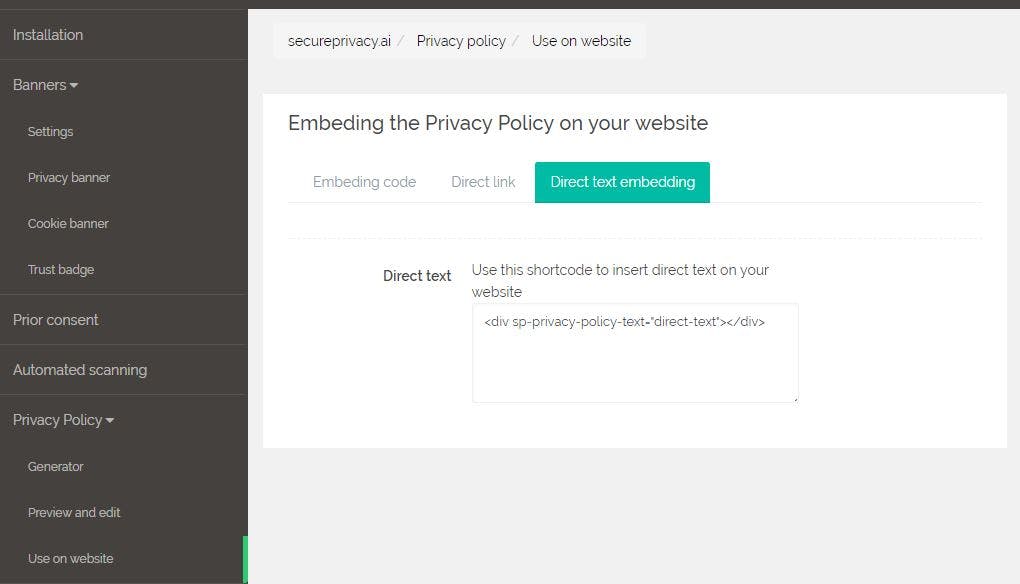
2. Copy the code shown.
3. Open your web page in any HTML editor.
4. Paste the HTML code anywhere inside the body section of your HTML
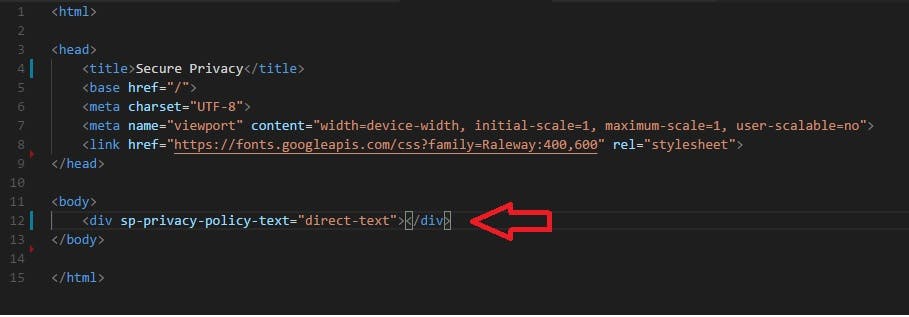
5. Save your page and your Privacy policy text will start appearing.

Data Broker Registration Explained (2026): How to Register Under U.S. Privacy Laws
Data brokers occupy a peculiar position in the privacy landscape: they are often the most consequential handlers of personal information that consumers have never heard of. A person may carefully manage what they share with their bank, their employer, and the apps on their phone — and still find their name, home address, income range, health interests, and browsing behavior for sale across hundreds of databases they never interacted with.
- Legal & News
- Data Protection

EU AI Act Implementation Sprint: A 90-Day Playbook for Enterprise Compliance
The EU AI Act is no longer a regulation on the horizon. Prohibited AI practices have been enforceable since February 2025. General-purpose AI obligations have applied since August 2025. And on 2 August 2026 — five months from now — the full weight of high-risk AI system requirements under Annex III comes into force, bringing with it a penalty structure that exceeds even the GDPR: up to €35 million or 7% of global annual turnover for the most serious violations, and up to €15 million or 3% for non-compliance with high-risk obligations.
- AI Governance

React Native Consent SDK: Implement Mobile Consent Management
Adding a consent banner to a React Native app is straightforward. Implementing consent management that actually controls data collection — where no third-party SDK fires a network request before the user has responded, where consent state persists correctly across sessions, and where every decision is logged for regulatory audit — is a different engineering problem.
- Mobile Consent