


How to add a privacy policy on any website with Secure Privacy
To add a privacy button on your website follow the following steps.
When having a cookie and privacy policy generator from Secure Privacy you can add a privacy button on your website by following these few steps.
We assume that you have already installed Secure Privacy Script on your website.
- Go to your account > Privacy Policy > Use on Website > Direct text Embedding
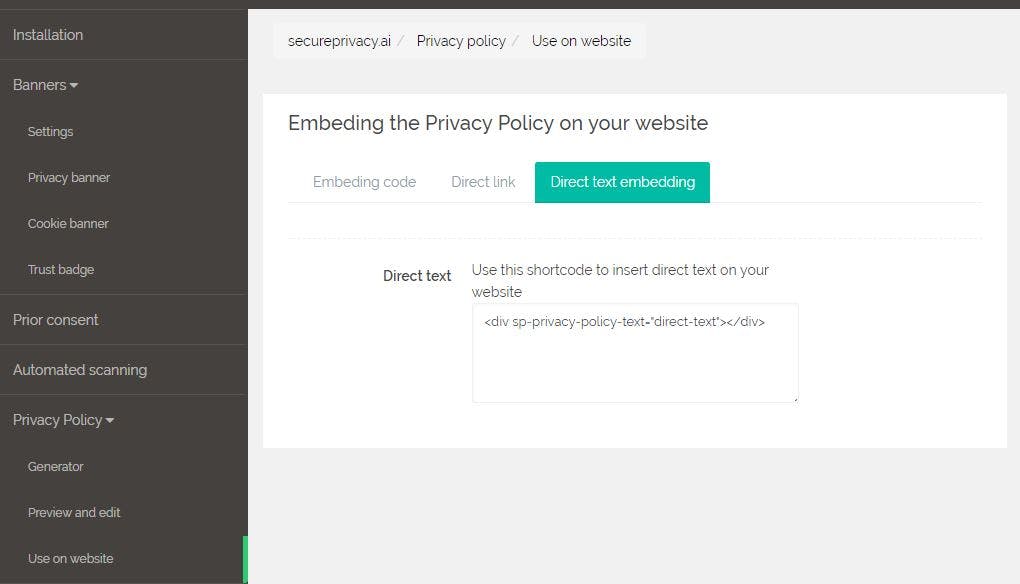
2. Copy the code shown.
3. Open your web page in any HTML editor.
4. Paste the HTML code anywhere inside the body section of your HTML
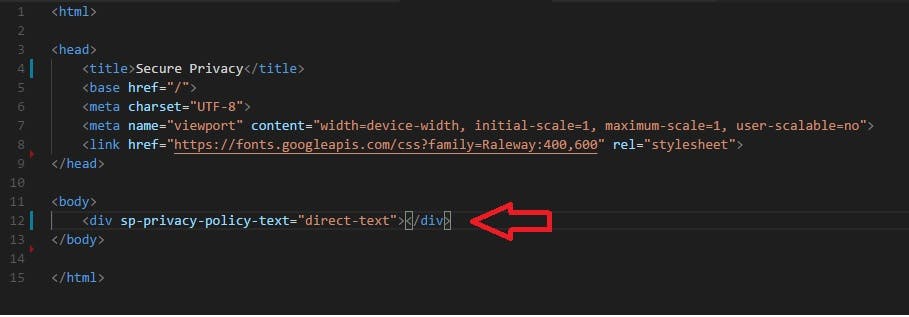
5. Save your page and your Privacy policy text will start appearing.

Kentucky Consumer Privacy Act (KCPA): What Businesses Need to Do
You run a mid-sized e-commerce platform. You have customers in about twenty states. Your analytics stack processes behavioral data on roughly 130,000 users a year, a fair share of them Kentucky residents. Until January 1, 2026, that was a background fact. As of that date, it is a compliance obligation — and if you have not mapped what you collect from those users, updated your privacy notice, or built a process to respond to their rights requests, you are already operating in violation of a law that carries penalties of up to $7,500 per violation.
- USA
- Data Protection

Operational AI Risk Management: From Frameworks to Real Controls
Your fraud detection model has been running in production for eight months. It was validated before launch, documented in a model card, and signed off by the risk committee. Nobody has touched it since. Last week, it started flagging 40% more transactions as suspicious — a quiet drift nobody noticed because the monitoring dashboard was set to alert only on catastrophic failure rates. Customers are being declined for legitimate purchases. The business impact is real and mounting. The compliance exposure, under the EU AI Act's post-market monitoring requirements for high-risk systems, is worse.
- AI Governance

Mobile App Privacy Compliance Guide: GDPR, CCPA & Beyond
Your app is live. Downloads are growing. Then someone in legal asks: "What happens when an analytics SDK fires before the consent banner resolves?" You review the network logs and discover that device identifiers are being transmitted to three different ad networks within 200 milliseconds of app launch — before a single user has touched the consent interface. The banner looked correct. The underlying behavior was not. That gap is where enforcement happens.
- Mobile Consent